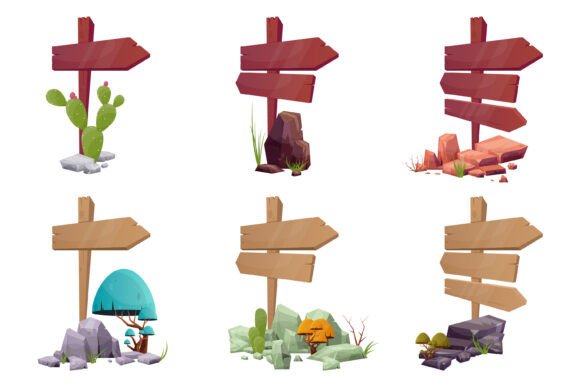
A Real Designer's Look at Rustic Directional Sign Clipart
Every embroidery designer knows that the moment you open a new file, you're not just looking at shapes on a screen. You're imagining thread meeting fabric, feeling out whether a design will translate well into stitches, and weighing if it’s worth your time—and your customer’s money. That’s exactly where my mind went when I first explored this Rustic Directional Sign Clipart. It’s a collection that immediately suggests a mood: warm, woodsy, and quietly narrative.
First Impressions: Where This Design Naturally Belongs
The stylized wooden signposts paired with simple scenic elements like rocks, trees, and mushrooms create a specific visual personality. It’s charming without being fussy, clear without being overly detailed. This isn’t a hyper-realistic illustration; it’s a graphic interpretation. That, for me, is a major strength for embroidery. These shapes are built for clean satin stitch borders and tidy fill stitch areas. My first thought was of an embroidered patch for a gardener’s tote bag or a subtle design on a linen pillow cover for a cabin-themed decor line. It feels inherently giftable and handmade.
The Practical Stitching Scenario: From File to Finished Product
I envisioned a real project to test this theory: a custom embroidered tote bag for a small boutique. The tote would be a natural canvas color, and I’d choose one of the directional signs with a cactus motif—perfect for a Southwest-themed shop. The real question is how the clipart performs when it’s no longer pixels but stitches. The clean lines and distinct elements should translate well into an embroidery file. Areas like the wooden post are ideal for a denser fill stitch, while the smaller scenic elements like individual rocks or mushrooms could be handled with simpler running stitches or lighter fills to avoid excessive stitch density.
This is where your experience as a crafter or small business owner comes into play. On textured fabrics like canvas or duck cloth, which are common for bags, the design’s clarity holds up well. On a smooth cotton sweatshirt for a cozy, personalized gift, the contrast would be sharp and appealing. I could easily see this adapted for a baby’s blanket with a gentle “North Pole” sign and a little tree, using soft pastel thread colors. The versatility for different products is clear: it fits apparel, home decor, and personalized gifts.
Where This Rustic Charm Requires a Careful Approach
Not every project is a perfect match. As a professional, you have to think through the limitations to protect the quality of your finished product. For this Rustic Directional Sign Clipart, the considerations are typical for graphics of this style.
- Small hoop sizes: If you’re thinking of putting this on a cap or a baby’s hat, you need to carefully check the overall size and the density. Some smaller scenic details might get lost or become too dense on a curved surface.
- Dark fabric: The design, with its natural, earthy implied palette, would need thoughtful thread color contrast on dark backgrounds. A black sweatshirt would require brighter, more saturated thread choices to make the rustic signs pop.
- Fabrics that challenge clarity: Stretchy fabrics or very thin materials like certain tea towels need proper stabilizer and possibly a reduction in overall stitch density to prevent puckering or distortion of those clean lines.
- Tiny lettering: If any signpost includes directional words like “N” or “W” in a very small font, that’s an area to inspect closely in your embroidery file preview. Tiny satin stitch lettering can be tricky.
The key is that this design isn’t overly complicated, which mitigates many risks, but a mindful setup is always required.
How This Clipart Translates to Business and Customer Appeal
For an Etsy seller or creative entrepreneur, using this clipart isn’t just about making a nice item. It’s about building visual appeal that drives customer trust and engagement. This rustic theme has a strong, recognizable aesthetic. When a customer sees it embroidered on a kitchen towel or a patch on a denim jacket, it communicates a specific handmade presentation—cozy, nostalgic, and quality. That consistency can become part of your brand if you specialize in rustic or outdoor-themed products.
For commercial embroidery projects, like producing merchandise for a small shop, the design offers good giftability and professionalism. It looks intentional and designed, not slapped together. This matters when your finished product is sitting next to others at a craft fair or in a boutique display. It elevates the perceived value.
Essential Designer Notes Before You Stitch
Before you commit to a real project or list a new product in your shop, here’s my practical advice, drawn from reviewing many graphics like this.
- Always test on scrap fabric first. Use the same material and color you plan for the final product. This reveals everything about thread contrast and stitch behavior.
- Check the design in black and white mockups. This helps you see the pure form and density without color influencing you. It’s a great way to spot potential problem areas.
- Compare light and dark fabric backgrounds digitally. Even just previewing the file on different colored screens can help you plan your thread palette.
- Confirm the licensing terms. This is critical. Before selling any finished items or digital products using this clipart, you must know if it’s licensed for commercial use. The product description states it’s part of a collection of Illustrations and Graphics, but the specific license terms are something you need to verify with the seller or source.
- Review the actual embroidery file specifics. Since the provided description doesn’t list exact stitch counts, file formats, or hoop sizes, it is your responsibility to examine those details in the downloaded files. Ensure the machine embroidery design is compatible with your equipment and intended hoop size.
In the end, Rustic Directional Sign Clipart presents a solid, appealing foundation for a wide range of projects. It has the visual personality to attract customers and the structural simplicity to stitch well. Your job as the designer or maker is to apply your skill to bring it to life thoughtfully, ensuring that the final embroidered product—whether it’s a holiday gift, boutique merchandise, or a personalized baby item—carries that rustic charm with professional clarity and durability.