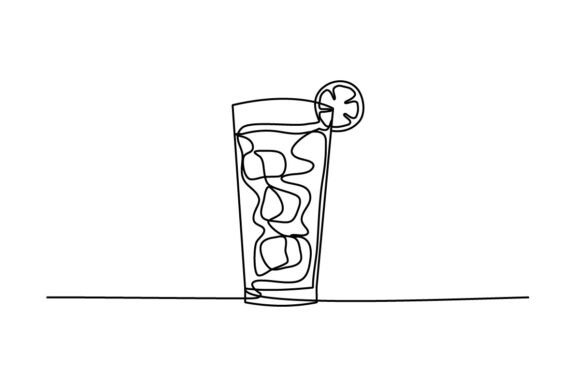
Lemon Juice Continuous Line Graphics & Illustrations
When I first opened the Lemon Juice Continuous Line file set, I immediately recognized its potential for the kind of clean, modern product listings that perform well on creative marketplaces. It is not an overly complex illustration, and that is exactly what makes it useful. The design features a single unbroken line forming a lemon with juice droplets, drawn with a sense of flow that feels contemporary and slightly upscale. The white background keeps the focus entirely on the linework, which is exactly what you want when you are testing a graphic across multiple product types before committing to a full collection launch.
I downloaded this set while preparing a seasonal summer bundle for my Etsy shop. I needed something that could bridge the gap between a restaurant menu aesthetic and a general lifestyle product line. The one continuous line approach gives it a handcrafted feel without being overly rustic. It leans modern, minimal, and slightly European in its visual personality. I could see it appealing to buyers looking for cafe branding, kitchen decor, citrus-themed merchandise, and even wellness-related products where lemon imagery signals freshness and vitality.
First Impressions and File Quality
The package arrived with three file formats: EPS, SVG, and JPG. For a digital seller, this trio covers the essentials well. I opened the EPS file first in Adobe Illustrator to check the path structure. The lines were clean, properly joined, and scaled without any degradation. This is critical if you plan to enlarge the design for print products like wall art or canvas prints. The SVG file imported smoothly into Cricut Design Space, and I tested a basic vinyl cut on my Maker 3. The cut lines were continuous and recognized correctly, which is something I always verify before listing any SVG design for crafters. A poorly constructed SVG with broken paths or overlapping nodes will generate refund requests fast, and this one passed my initial cut test without issues.
The JPG file is a flat raster version on a white background. It is useful for quick mockup placement and digital-only products, but I treat it as a secondary format. For most of my product creation workflow, the vector files are where the real value sits. I did notice the JPG resolution was sufficient for standard screen display, though I would not push it to large-format printing without working from the vector source instead.
Identifying the Right Buyer Audience
This design sits in a specific niche that I have seen perform consistently across multiple marketplaces. The continuous line art trend has been strong for several years, and citrus motifs remain popular in summer collections, kitchen decor, and modern restaurant branding. The single-line style attracts buyers who appreciate minimalism but still want something with character. It is not overly feminine, not overly masculine, and that neutrality expands its reach. I pictured it working for a small cafe owner designing a seasonal drink menu, a print-on-demand seller creating a lemon-themed tote bag, or a Canva template designer building Instagram story templates for a juice bar client.
The restaurant drink menu design concept is baked into the asset's DNA. The continuous line suggests freshness and flow, the kind of visual language that pairs naturally with beverage listings, cocktail recipes, and organic product branding. I kept this in mind as I tested it across different product mockups. The decorative quality of the linework means it can function as a standalone focal point or as a supporting element within a larger composition.
Testing Across Product Scenarios
Before listing any new design asset in my shop, I run it through a series of practical product tests. For Lemon Juice Continuous Line, I started with a printable wall art mockup. I placed the design on a clean off-white background, added a subtle handwritten script font beneath it, and framed it in a simple gallery mockup. The result was understated and elegant, the kind of piece that could sell as part of a kitchen print bundle or a set of citrus-themed art downloads.
Next, I moved to print-on-demand products. I uploaded the design to a test listing for a cotton tote bag. The single-line style translated well to fabric, maintaining its crispness without appearing too delicate. I also tested it on a ceramic mug mockup, where the continuous line wrapped around the curved surface naturally. For tumbler wraps, I would recommend scaling the design carefully and previewing the wrap alignment before listing, since the continuous line needs to flow without awkward breaks at the seam.
Apparel testing was my third checkpoint. I placed the design on a unisex t-shirt mockup in a soft yellow colorway that complemented the lemon theme. The line art held up well, but I noted that on darker shirt colors, the design would need to be inverted or recolored. Since the original files are provided on a white background, you will need to extract the linework from the vector files and adjust the stroke color for dark garment applications. This is a standard step for any experienced seller, but worth flagging for those newer to the process.
For Cricut users, I tested a heat transfer vinyl application on a canvas tote and a simple adhesive vinyl decal on a water bottle. Both cuts were clean. The continuous line design is forgiving for weeding, which is a practical consideration that crafters appreciate. Designs with too many tiny disconnected elements create weeding frustration, but this one maintains a connected flow that simplifies the process.
Where the Design Performs Best
I found the strongest applications for this asset in a few specific categories. Printable products are the most natural fit. The design works beautifully as wall art, recipe card decoration, kitchen planner inserts, and menu design elements. Branding materials for food and beverage businesses represent another high-value use case. The continuous line aesthetic pairs well with logo concepts, social media post templates, and packaging accent graphics.
Seasonal bundles are where I see the strongest marketplace opportunity. Summer collections, citrus-themed product lines, lemonade stand graphics for kids, and refreshing drink recipe eBooks all benefit from this type of versatile illustration. I also tested it as a decorative element within a digital planner template, where it added visual interest to a meal planning section without overwhelming the functional layout.
For Canva template sellers, this design offers flexibility. It can be uploaded as a standalone graphic element that customers can resize, recolor, and layer within their own designs. The minimalist linework means it does not compete with text or other design elements, making it a safe addition to template kits aimed at small business owners who need professional-looking results without design expertise.
Caution Points and Practical Limitations
Every design asset has limitations, and being honest about them saves time and prevents listing issues later. With Lemon Juice Continuous Line, the main consideration is scale. The linework is relatively fine, which means it can lose impact at very small sizes. I would not recommend this design for tiny sticker details, small enamel pin concepts, or anything where the design needs to read clearly at under one inch. At that scale, the continuous line becomes a thin squiggle rather than a recognizable lemon.
Dark background applications require extra work. Since the original design is intended for a white background, you will need to manually adjust the stroke color in your vector software before placing it on black, navy, or dark-toned products. The JPG file is essentially unusable on dark backgrounds without significant editing. I recommend working from the EPS or SVG file and changing the stroke color to white or a light tone for dark substrate applications.
Text-heavy templates need careful layout planning. The continuous line design has a horizontal flow, and it works best when given breathing room. Cramming it into a corner of a busy invitation or placing it behind dense paragraphs of text will dilute its visual impact. I treat it as a hero element rather than a background filler.
For print-on-demand products with strict color profiles, test the line color on your specific substrate. The default black stroke may print slightly heavy on absorbent materials like uncoated paper or certain fabrics. I always order a sample before scaling a design across multiple product listings.
Pairing with Typography for Product Listings
Typography choices can make or break a product listing that uses this type of graphic. I tested Lemon Juice Continuous Line alongside several font categories to see which combinations created the most marketable results. Script fonts with fluid, natural strokes complemented the continuous line aesthetic beautifully. The pairing felt cohesive and elevated, suitable for wedding-related products, spa branding, and premium food packaging.
Serif fonts added a classic, slightly editorial quality that worked well for recipe cards and menu designs. Handwritten fonts created a casual, approachable feel that would appeal to the farmhouse decor and rustic kitchen niche. Sans serif fonts produced a clean, modern look ideal for minimalist branding and contemporary product lines. I found that bold display fonts overpowered the delicate linework, so I would lean toward lighter weights and more refined typography choices when building product mockups.
Organizing Files for Customer Delivery
Customer experience matters as much as design quality. I organized the received files into clearly labeled folders before uploading to my test shop. The EPS file went into a folder labeled Vector Source, the SVG into a folder labeled Cut Files, and the JPG into a folder labeled Printable Art. I also included a simple text file with usage tips and a reminder about commercial licensing terms. This small step reduces customer confusion and support inquiries, which directly impacts your shop's review rating and repeat purchase rate.
If you plan to bundle this design with other citrus-themed assets, I recommend keeping the file naming consistent and avoiding overly technical names that confuse non-designer buyers. Something like LemonJuice_ContinuousLine_SVG and LemonJuice_ContinuousLine_EPS is clearer than the raw export filenames that sometimes come with purchased assets.
Commercial Licensing and Marketplace Considerations
Before listing any finished product that incorporates this design, verify the commercial license terms that accompany the purchase. Most graphic design assets sold for commercial use allow you to create physical products and digital downloads, but restrictions may apply to reselling the design in its raw form or including it in a competing clipart bundle. I always keep a copy of the license file in my project folder for reference.
For Etsy sellers, this design fits well within the handmade and craft supply categories. For print-on-demand platforms like Merch by Amazon or Redbubble, the design's simplicity and broad appeal give it a decent chance of visibility. On Creative Fabrica or Design Bundles, it would work as part of a larger citrus or kitchen-themed collection rather than as a standalone asset.
Final Practical Assessment
After testing Lemon Juice Continuous Line across multiple product types, mockup scenarios, and cutting applications, I can say it is a solid, versatile graphic design asset for sellers who understand its strengths and limitations. It is not a one-size-fits-all solution, but no single design ever is. What it offers is a clean, modern, commercially viable illustration that can anchor a product listing or complement a broader design bundle.
For the price point and file quality, I would use it confidently in printable wall art, kitchen decor, menu templates, and simple apparel designs. I would avoid pushing it into tiny detail applications or expecting it to perform on dark backgrounds without adjustment. The continuous line style is on-trend, the lemon motif is perennially popular, and the decorative elements drawn on a white background give it a polished, ready-to-use quality that shortens the path from asset download to product listing.
If you are building a summer collection, refreshing your kitchen-themed product line, or looking for a distinctive graphic element that can elevate a drink menu or recipe card, this design deserves a place in your testing workflow. Run it through your own mockup process, check the cut quality on your specific machine, and see how it resonates with your audience before scaling it across your shop.